What Is the Expertise Signal in E-E-A-T? A Practical Guide for SEO
AI Summary
What is the Expertise signal in E-E-A-T? Expertise is the second letter of Google’s E-E-A-T framework and evaluates whether the content creator has the knowledge required to cover the topic accurately. Unlike Experience, which asks whether the creator has lived through the topic, Expertise asks whether they know the topic deeply enough to produce reliable, substantive content. Google’s framework recognizes two forms: formal Expertise backed by credentials and demonstrated Expertise visible in the writing itself.
What this article covers and who it is for: This article covers what Expertise means in the framework, the distinction between formal and demonstrated Expertise, how Topic Authority compounds the signal through content clusters, how Google measures Expertise through proxies, the role of author bios and schema markup, common failure patterns, Expertise requirements in YMYL industries, and how to build Expertise surface area deliberately. It is for content strategists, SEO practitioners, and business owners who need to understand how knowledge and competence translate into ranking signals.
The rule: Credentials open the door. The writing has to walk through it. A byline with impressive qualifications attached to shallow content produces a weaker Expertise profile than the credentials suggest. The framework evaluates Expertise through what the content demonstrates, not just what the author claims. Sites that invest in both credentialed authors and substantive writing produce the strongest Expertise signals.
What Expertise Means in E-E-A-T
Expertise is the second letter of E-E-A-T and the one most commonly misunderstood as being purely about formal credentials. Google’s framework recognizes both formal Expertise and demonstrated Expertise, and the framework treats them differently depending on the topic and the writing context.
The operational definition of Expertise is whether the writer demonstrates the knowledge required to cover the topic accurately. The signal lives at the writer level rather than at the site level, and it can be evaluated through credentials, through the writing itself, or through both. The framing in the Search Quality Rater Guidelines instructs raters to evaluate “the extent to which the content creator has the necessary knowledge or skill for the topic.”
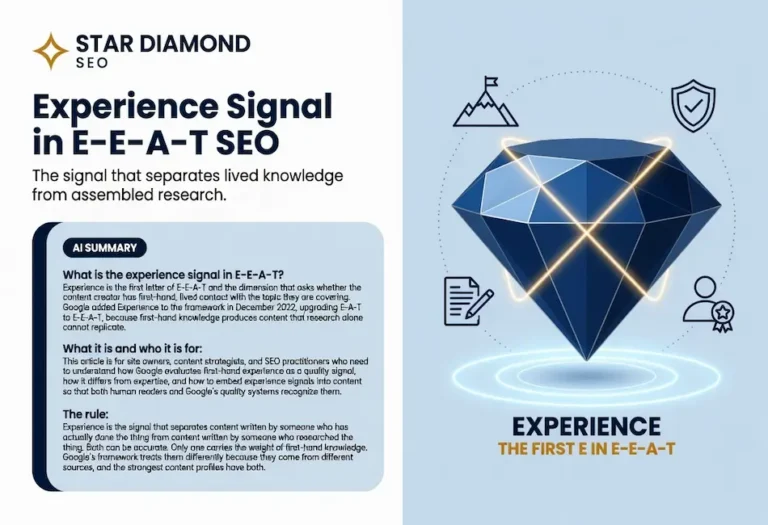
The shorthand version: Expertise is the question of whether the writer knows the topic, not whether they have lived through it. The dimension is fundamentally about knowledge rather than experience. A researcher who has spent years studying a subject without first-hand contact has Expertise. A practitioner who has lived through a subject without formal training has Experience. The strongest profiles combine both, and the framework treats them as separate signals because they come from different sources.
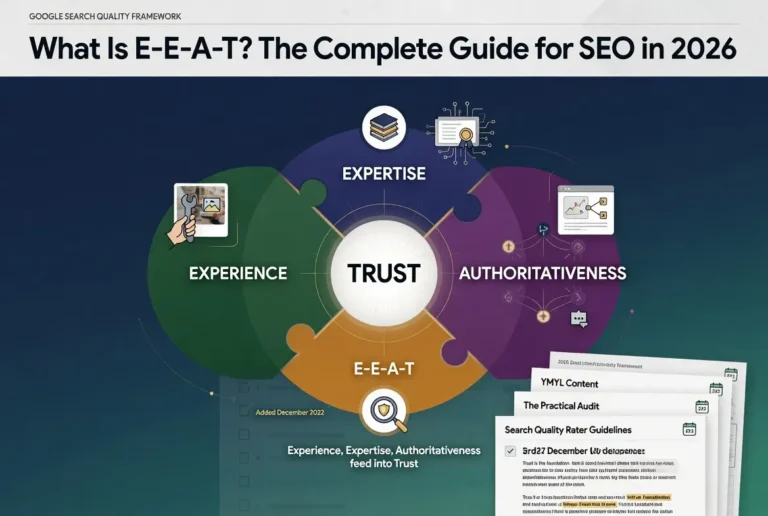
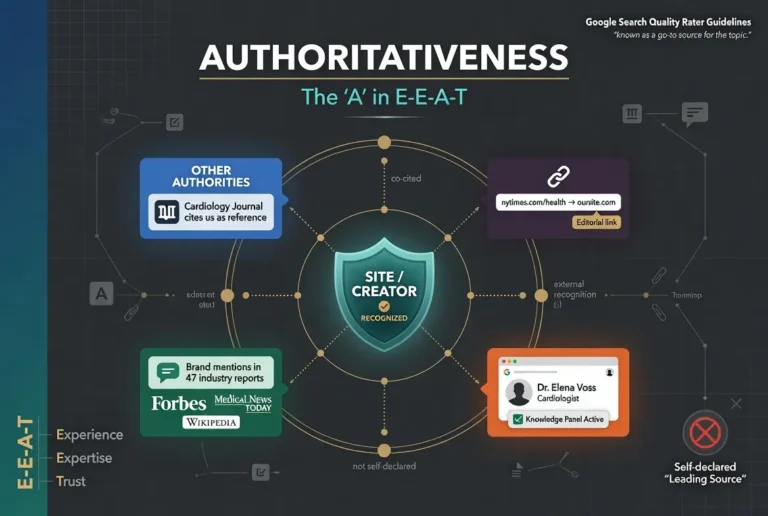
For the broader cluster context, the pillar guide on E-E-A-T covers how Expertise integrates with the other three signals. The sibling article on Experience covers the distinction between Expertise and first-hand contact, and the articles on Authoritativeness and Trust cover the third and fourth letters.
Formal vs Demonstrated Expertise
The framework recognizes two forms of Expertise, and the distinction between them is operationally important for any site trying to figure out where to invest.
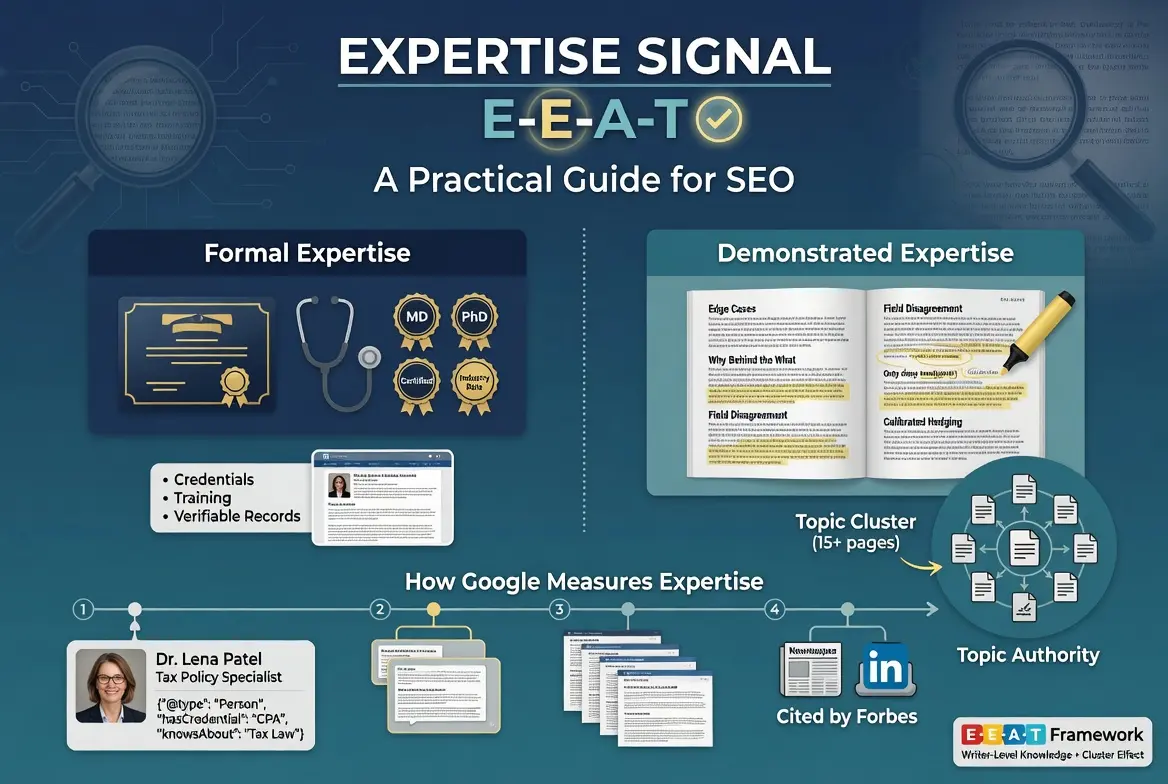
Formal Expertise is the credentials version. Medical degrees, professional certifications, academic appointments, recognized industry positions. The signal is verifiable through external records and is the easiest to evaluate because the credential either exists or it does not. The framework values formal Expertise particularly for topics where formal training is the recognized path to competence.
Demonstrated Expertise is the writing-itself version. The content shows knowledge through how it handles edge cases, how it explains the why behind the what, how it engages with disagreement in the field, and how it surfaces details that only someone with deep working knowledge would surface. The signal is observable in the content directly and does not require external verification. The framework values demonstrated Expertise even when formal credentials are absent, particularly for topics where the recognized path to competence is not credentialing-based.
The two forms are not interchangeable, but they reinforce each other. A writer with formal credentials who cannot demonstrate the knowledge in their writing has a weaker Expertise profile than the credentials suggest. A writer with no formal credentials who demonstrates the knowledge consistently across substantive content has a real Expertise profile despite the absence of a credential. The strongest configurations have both, and the framework treats them as parallel inputs into the broader Expertise judgment.
The implication for content strategy is that operators should not assume formal credentials alone produce the Expertise signal. The credential opens the door. The writing has to walk through it. Sites that publish credentialed content where the writing itself fails to demonstrate the knowledge implied by the credentials produce profiles that look strong on paper but fail the framework when evaluated.
Topic Authority and the Cluster Effect
Expertise compounds at the topical level through what Google has described as Topic Authority. The mechanism is that a site demonstrating Expertise across a substantive cluster of related topics builds a stronger Expertise signal than a site demonstrating Expertise on a single page or a scattered handful of topics.
The reasoning is operational. A single page can be written by anyone who researched the topic adequately for one article. A cluster of fifteen substantive pages on related aspects of the same topic, each engaging with edge cases and demonstrating depth, signals sustained engagement that researchers without genuine knowledge struggle to produce. The content cluster strategy framework exists specifically because this compounding effect is one of the strongest signals a site can build. Each cluster is anchored by a content pillar that concentrates the deepest Expertise into a single comprehensive page, with supporting articles extending into related subtopics that reinforce the pillar’s authority.
The cluster effect connects directly to the broader concept of Authoritativeness, which is covered in the tier article on Authoritativeness. The two signals work together. Expertise builds at the writer level. Topic Authority builds at the site level through accumulated Expertise across content. Authoritativeness builds at the recognition level through external validation of the Expertise the site has demonstrated. Each layer reinforces the others. The internal linking architecture is the connective tissue that makes the cluster legible to Google, because without explicit links between the pages, the topical relationship is implicit rather than declared.
The practical implication for cluster-based content strategy is that Expertise investment is most efficient when it concentrates on topics where the writer or site can build durable depth rather than scattered surface coverage. Twenty articles on five different topics produces less Expertise signal than twenty articles on one focused topic, because the cluster effect amplifies the signal in ways scattered coverage cannot. YMYL verticals like real estate, dental, and healthcare reward this depth the most because Google holds those industries to a higher Expertise standard than general informational topics.
For the structural side of how content depth supports Expertise, the Content discipline covers the production standard.
How Google Measures Expertise
The same caveat that applies to the other three letters applies here. E-E-A-T is not a direct ranking factor. The framework lives in the Quality Rater Guidelines and shapes the rater evaluations that train Google’s ranking systems over time. Google’s algorithms cannot directly measure Expertise the way a human rater can. They measure proxies for Expertise. Understanding how those proxies feed into how Google ranks search results clarifies why certain Expertise investments produce measurable ranking movement and others do not.
The proxies break into four categories.
The first is author-level signals. Named bylines that link to verifiable real people. Author bio pages that surface qualifications, training, and relevant experience. Schema markup that makes the author information machine-readable through the Person and Organization types. Cross-references to the author across other authoritative sites, which Google’s systems use to corroborate the claimed expertise.
The second is content-level signals. Engagement with edge cases that researchers without expertise typically miss. Explanation of the why behind the what, indicating understanding of underlying principles rather than surface knowledge. Engagement with disagreement in the field, which signals familiarity with the actual debate rather than the popularized version of it. Calibrated hedging where the writer is more confident about claims within their direct knowledge and less confident about claims at the edges. These are the same principles that separate effective SEO writing from content that reads like it was assembled from search results. The helpful content framework reinforces this from Google’s side: content demonstrating genuine knowledge for the reader’s benefit is the standard, and content that mimics knowledge for ranking purposes is the pattern Google is actively working to identify and suppress.
The third is site-level signals. Topical depth across a substantive cluster of related content, indicating sustained engagement with the subject area. Consistency of authorship or editorial standard across the cluster, indicating a genuine knowledge base rather than scattered freelance contributions. Update patterns that maintain the cluster over time as the topic evolves. The cadence of publishing and updating is itself part of this signal. The calibration discipline provides the measurement framework for determining whether the content is actually performing against Expertise expectations or decaying silently.
The fourth is external corroboration signals. Citations from other authoritative sources in the topic area. Mentions in journalism that treat the writer or site as a credible source. Inclusion in industry conversations that recognized voices in the field also participate in. The corroboration signals connect Expertise to Authoritativeness and produce the compound effect that the Credibility discipline is built to support through off-page signals and entity validation.
The implication for operators is that all four categories matter and they reinforce each other. A site with strong author-level Expertise but no site-level depth produces a weaker profile than a site where all four categories align. The on-page SEO checklist covers the technical implementation of several of these signals at the page level.
Author Bios and Schema Markup
The author bio is where formal Expertise gets surfaced operationally, and Schema markup is where the bio information becomes machine-readable. Sites that publish substantive content under named bylines with verifiable credential links produce a stronger Expertise signal than sites that publish under generic admin accounts or hide the authorship layer entirely.
The baseline author bio includes several specific elements. The author’s full name, displayed prominently on every article they write. A bio paragraph that surfaces relevant qualifications, training, and experience for the topics they cover. A photograph of the actual person, which is itself a Trust signal that the byline represents a real human. Links to the author’s verifiable presence on platforms appropriate to the topic, including academic profiles, professional registries, industry publications, and social platforms where they have substantive engagement with the subject area.
The Schema.org Person type is the technical layer that makes the bio information machine-readable. The properties that matter most for Expertise signaling include name, jobTitle, alumniOf, hasCredential, sameAs (linking to authoritative profiles elsewhere on the web), and knowsAbout (specifying the topics the author is qualified to cover). The Credibility discipline covers the operational implementation of these schemas.
The implementation pattern that scales is the consistent application of author bylines and schema across every article on the site, not just the flagship pieces. Sites that surface authorship on flagship content but hide it on long-tail content produce inconsistent profiles that quality raters and algorithmic proxies both flag.
One detail that operators frequently miss. The Person schema’s sameAs property is the strongest cross-corroboration signal because it explicitly links the author entity to authoritative profiles on other recognized platforms. Linking the author to their LinkedIn, their academic profile, their Wikipedia entry where one exists, and their published books on platforms like Amazon all create an entity graph that Google’s systems use to verify the claimed Expertise.
How Expertise Fails: Common Patterns
The most common Expertise failures are predictable. They show up across new sites, established sites that have grown careless about the authorship layer, and sites that have moved to AI-generated content without preserving the human Expertise grounding.
The first common failure is the missing or generic byline. The site publishes under “admin,” “editor,” or no byline at all. The Expertise signal at the author level is absent because there is no author the framework can evaluate. The fix is operational. Every substantive article needs a named byline that links to a real bio page.
The second common failure is the credentialed bio without demonstrated knowledge. The author has impressive credentials in the bio, but the writing itself does not surface the knowledge those credentials imply. Generic explanations of concepts the credential should give the author depth on. Surface coverage of debates the credential should give the author position on. The mismatch is detectable both by quality raters and by content-level analysis.
The third common failure is the topic-credential mismatch. The author has formal credentials, but the credentials are in a different field than the topic being covered. A nutritionist writing about taxation does not produce Expertise signals on tax topics regardless of how strong their nutrition credentials are. The framework evaluates Expertise relative to the topic, not in absolute terms.
The fourth common failure is the AI-generated content without Expertise grounding. AI tools can produce content that mimics surface features of expertise, including vocabulary, structure, and the appearance of engagement with the topic, without the underlying knowledge that makes the writing reliable. The patterns are increasingly identifiable because AI-generated content struggles with edge cases, fails to engage substantively with disagreement, and produces calibration that does not match real expertise. Google’s AI content detection systems are increasingly capable of identifying these patterns, and the question of whether Google penalizes AI content becomes less relevant when the actual failure is the absence of genuine Expertise signals. The editorial layer that bridges AI output and publishable content exists specifically to solve this problem by ensuring a human with genuine Expertise reviews, corrects, and enriches every piece before publication. The guide on how to use AI to write SEO content walks through the full process of maintaining Expertise signals in an AI-assisted workflow.
The fifth common failure is the topical scatter. The site publishes across too many unrelated topics for any single author or editorial team to genuinely have Expertise across all of them. The pattern signals freelance content production rather than genuine knowledge base, and the cluster effect that amplifies Expertise signals does not apply because there is no cluster.
Expertise in YMYL Industries
YMYL topics are where Expertise scrutiny is highest and where the framework is least forgiving. Google defines YMYL as topics that could significantly impact a person’s health, financial stability, or safety if the information presented is inaccurate. The Expertise standard for these topics is materially higher than for general informational content.
Industries like healthcare, dental, legal, financial advising, and real estate operate almost entirely within YMYL territory. A dental practice publishing content about procedures needs verifiable credentials behind that content. A real estate firm publishing guides about property investment is touching financial decision-making territory where the framework expects the writer to have demonstrable qualifications.
The practical consequence is that YMYL content produced without credentialed authorship faces a ceiling that no amount of on-page optimization or link building can overcome. Google’s quality raters are explicitly instructed to evaluate YMYL content against a higher Expertise bar. Content that would score adequately for a general informational query will fail for a YMYL query if the Expertise signals are weak or absent.
Businesses operating in YMYL verticals should treat Expertise investment as infrastructure, not optimization. The credentials, the author bios, the schema markup, and the demonstrated knowledge in the writing all need to be in place before the content strategy scales. Building volume without building Expertise in a YMYL space is building on sand. A content gap analysis can reveal which YMYL topics the organization has the credentials and knowledge to cover with genuine Expertise and which topics require bringing in subject matter experts before publishing.
Building Expertise Surface Area
The hardest case for Expertise is the new site or new writer with no prior public track record on the topic. Expertise signals build over time through accumulated content and accumulated external corroboration, and the trajectory cannot be shortcut. The question becomes how to build the surface area that earns Expertise recognition deliberately.
The work breaks into four stages.
Stage one is the foundation. Decide which topics the writer or site genuinely has Expertise in, and stop publishing in topics outside that scope. The narrowing is the hardest part for new sites because the temptation is to chase volume. Operators who hold the discipline produce Expertise profiles that scale. Operators who scatter across unrelated topics produce profiles that fail the framework regardless of how much content they publish.
Stage two is the cluster construction. Build out a substantive cluster of related content within the chosen topic, with each piece engaging with edge cases and demonstrating depth. The cluster effect amplifies Expertise signals once it reaches enough mass to signal sustained engagement, and the threshold is lower than most operators assume. Ten substantive pieces on a focused topic outperform fifty scattered pieces on unrelated topics.
Stage three is the corroboration layer. As the cluster matures, build the external corroboration that the framework recognizes. Citations from other authoritative sources in the topic area. Mentions in journalism. Inclusion in industry conversations. Schema markup that links the author entity to authoritative profiles elsewhere on the web. The corroboration signals connect Expertise to Authoritativeness and produce the compound effect that mature Expertise profiles depend on.
Stage four is the maintenance. Expertise erodes when content stops being updated as the topic evolves. The discipline of keeping the cluster current is what separates Expertise profiles that scale from profiles that decay. Operators who treat content as a one-time investment produce decaying Expertise. Operators who treat content as ongoing maintenance produce Expertise that compounds. The Cadence discipline covers why publication and update frequency are structural inputs, not afterthoughts. The technical foundation underneath the content has to support this maintenance too. If Google cannot efficiently crawl and index the updated content, the Expertise investment is invisible. The crawlability discipline ensures the technical layer does not bottleneck the Expertise layer above it.
Verdict
Expertise is the second letter of E-E-A-T and the dimension that asks whether the writer demonstrates the knowledge required to cover the topic accurately. The framework recognizes both formal Expertise through credentials and demonstrated Expertise through the writing itself, and the strongest profiles have both in proportion to the topic.
The proxy signals Google’s systems use include author-level signals through bylines and schema markup, content-level signals through engagement with edge cases and calibrated hedging, site-level signals through topical depth and cluster construction, and external corroboration through citations and mentions in authoritative coverage. All four reinforce each other, and Expertise built on only one category is fragile.
The cluster effect is the operationally important part for content strategy. Twenty pieces on one focused topic outperform fifty pieces scattered across unrelated topics because the framework amplifies Expertise signals when they cluster around sustained engagement with a subject area. Sites that hold the discipline of topical focus produce Expertise profiles that scale. YMYL industries face a higher bar, and the Expertise investment in those verticals is non-negotiable.
The practical sequence for building Expertise from zero is the four-stage progression. Choose the topics where genuine Expertise exists. Build the substantive content cluster. Layer in the external corroboration as the cluster matures. Hold the maintenance discipline as a permanent commitment.
For the integration of Expertise with the other three letters as a system, the pillar piece ties them together. The sibling articles on Experience, Authoritativeness, and Trust cover the other three signals.
FAQ
What is the Expertise signal in E-E-A-T?
Expertise is the second letter of Google’s E-E-A-T framework and evaluates whether the content creator has the knowledge required to cover the topic accurately. It is fundamentally about knowledge rather than lived experience. Google’s framework recognizes two forms: formal Expertise through verifiable credentials and demonstrated Expertise visible in how the writing handles edge cases, explains underlying principles, and engages with disagreement in the field.
What is the difference between formal and demonstrated Expertise?
Formal Expertise comes from credentials such as degrees, certifications, and professional appointments. It is verifiable through external records. Demonstrated Expertise comes from the writing itself, showing knowledge through depth, accuracy, and engagement with complexity that only someone with genuine understanding can produce. The strongest Expertise profiles have both. A writer with impressive credentials who produces shallow content has a weaker profile than the credentials suggest, and a writer without formal credentials who consistently demonstrates deep knowledge has a real Expertise profile despite the absence of a credential.
How does Google measure Expertise?
Google measures Expertise through proxies across four categories. Author-level signals include named bylines, author bio pages, and schema markup that makes credentials machine-readable. Content-level signals include engagement with edge cases, calibrated hedging, and explanation of underlying principles. Site-level signals include topical depth across content clusters and consistent update patterns. External corroboration signals include citations from authoritative sources and mentions in industry coverage. All four categories reinforce each other.
Why does Expertise matter more for YMYL topics?
YMYL topics are those that could significantly impact a person’s health, financial stability, or safety if the information is inaccurate. Google holds these topics to a materially higher Expertise standard because the consequences of unreliable content are more severe. Healthcare, legal, financial, dental, and real estate content all fall within YMYL territory. Content in these verticals produced without credentialed authorship faces a ranking ceiling that no amount of on-page optimization or link building can overcome.
How do I build Expertise signals for a new site?
Building Expertise from zero follows a four-stage progression. First, choose the specific topics where genuine Expertise exists and stop publishing outside that scope. Second, build a substantive content cluster within the chosen topic, with each piece demonstrating depth and engaging with edge cases. Third, layer in external corroboration as the cluster matures through citations, mentions, and schema markup linking the author to authoritative profiles. Fourth, maintain the cluster as a permanent commitment because Expertise erodes when content stops being updated as the topic evolves.